
TOKENS of the Metros of Cities in the Territory of the USSR
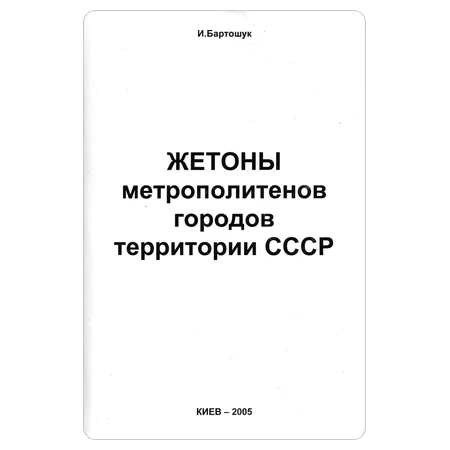
Author: Igor Bartoshuk Language: Russian Kyiv, 2005 This catalogue continues A. Kozhara's catalogue "Metro Tokens That Circulated or Circulate in the Territory of the Former USSR" (1997), the first work on the subject. Since then, metro systems have issued many new tokens, and new varieties have been discovered among those already known. This prompted the author to compile a new catalogue. History of the tokens. From the opening of the first Soviet metro in 1935 until 1992, tokens were used only in Moscow (from 15.03.1935) and Leningrad (from 1955; made by the Leningrad Mint, value 50 kopecks). They were issued out of necessity, as there was no coin in circulation equal to the fare. After the 1961 monetary reform, a 5-kopeck coin was used to pass through the metro turnstiles. The inflation of the 1990s led to the abandonment of the familiar 5-kopeck coins, and in 1992 tokens were introduced in several cities at once: Moscow, Saint Petersburg, Nizhny Novgorod, Samara (first metal, later plastic), Yekaterinburg, Novosibirsk, Tashkent, Minsk, Kharkiv, Kyiv, and Baku. Since then, tokens have been used in 14 of the 15 metro systems, and every change in fares or design brings new types, both metal and plastic. The catalogue describes the tokens of the metro systems of Azerbaijan (Baku), Armenia (Yerevan), Belarus (Minsk), Georgia (Tbilisi, New Athos), Russia (Yekaterinburg, Moscow, Nizhny Novgorod, Novosibirsk, Leningrad / Saint Petersburg, Samara), Ukraine (Dnipropetrovsk, Kyiv, Kharkiv), and Uzbekistan (Tashkent). The information in the catalogue covers the period up to 2005. Contact the author via Viber: +38 097 223 71 63